




The English Folly: the edifice complex

|
| The English Folly: the edifice complex, Gwyn Headley and Wim Meulenkamp, Liverpool University Press for Historic England, 2020, 260 pages, colour and black and white illustrations. |
Follies are among the most charming and eccentric of all historic buildings in England, so it is little surprise that amid their builders there are equally quirky characters. ‘For some reason (climate, diet, lie of the land, who knows?),’ writes Wim Meulenkamp, ‘England has always abounded in eccentrics. Other peoples and countries have had their fair share, but eccentrics appear to have thrived exceedingly well in the English environment.’
The authors, having already written several books about follies, set out to write more about the men (and they were overwhelmingly men) who built them: Thomas Tresham and his famous triangular folly; his Stinkiness (the 1st Duke of Kent); William Beckford, owner of the largest fortune in England, amassed on the back of the slave trade, builder of Fonthill Abbey and ostracised from society for being homosexual; or ‘Mad Jack’ Fuller, to just skim the surface.
As the authors point out, murder, insanity, theft, religious mania, rape and slavery abound in the stories of these follies. Just as one needs a breather from all the big characters and bad behaviour, Jack the Treacle Eater is introduced. Surely he is a benign character? But it turns out Jack is a folly not a person.
This lively and chatty book tells the incredible stories behind these buildings. Each chapter features a different type of folly (grottoes, sham ruins, towers, hermitages and so on), with a gazetteer at the end of each listing examples. For more methodical cataloguing of the approximately 2,000 follies across the country the authors have a series of e-books, ‘Follies of England’, or the single comprehensive guide ‘Follies, Grottoes and Garden Buildings’. This book is more of a side order, great to dip into and full of enjoyable anecdotes that bring the history of these buildings to life.
This article originally appeared as ‘Fools and their follies’ in Context 167, published by the Institute of Historic Building Conservation (IHBC) in March 2021. It was written by Kate Judge, architectural historian.
--Institute of Historic Building Conservation
Related articles on Designing Buildings Wiki
IHBC NewsBlog
IHBC sponsors Gardens Trust event 23-4 Sept 2026
.jpeg)
'Learning from the Past, Shaping the Future’ takes place in Milton Keynes
Renovations to Frank Lloyd Wright's Fallingwater complete
.jpg)
World Heritage Preserved project opens house for tours again
Shakespeare Birthplace Trust places Hall's Croft on HAR Register
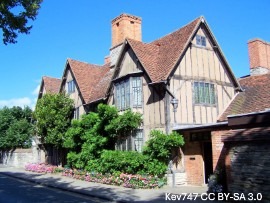
Stratford-upon-Avon home of Shakespeare's daughter is 'At Risk'
Lady Grange’s House repaired on St Kilda
.jpg)
National Trust for Scotland repairs stone cleit with link to famous island resident
Griff Rhys Jones on BBC Radio 4 Today programme
,_Green_Lane,_Derby.jpg)
The Victorian Society’s President unveiled its latest Top Ten Endangered Buildings 2026.
Need a MATE? Book your place now.
IHBC offers free webinars on applying for IHBC accreditation (Full & Associate).
UK Stained Glass Repository finds windows new homes
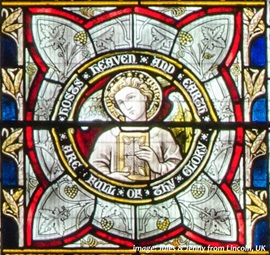
How are stained glass windows are rescued, stored and repurposed?
APPGEBE report sets high aims for quality
'Government must not sacrifice quality in drive to build 1.5m homes'
New measures protect Historic Shipwrecks from heritage crime

Underwater cultural heritage benefits from new HE guidance
How could the City of London skyline look in 6 years' time?

Visualisation shows approved planning applications as completed buildings
National Trust for Scotland calls for VAT cuts
Heritage neglect is encouraged by current policies
IHBC's 'Context' Issue 186 features Industrial Heritage
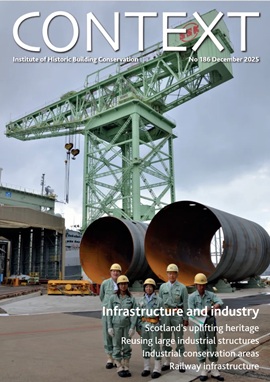
IHBC's members' journal reports on the challenges of conserving infrastructure
Book now for IHBC Annual School 2026
IHBC Annual School is taking place 18-20 June 2026 in Newcastle
RICHeS Research Infrastructure offers ‘Full Access Fund Call’
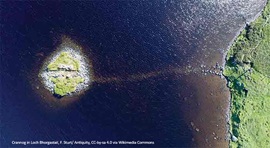
RICHeS offers a ‘Help’ webinar on 11 March
Latest IHBC Issue of Context features Roofing
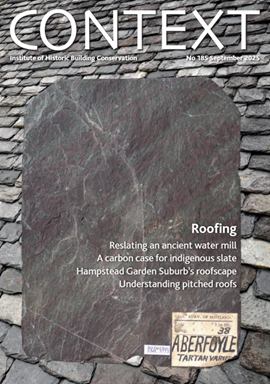
Articles range from slate to pitched roofs, and carbon impact to solar generation to roofscapes
Three reasons not to demolish Edinburgh’s Argyle House

Should 'Edinburgh's ugliest building' be saved?
IHBC’s 2025 Parliamentary Briefing...from Crafts in Crisis to Rubbish Retrofit
IHBC launches research-led ‘5 Commitments to Help Heritage Skills in Conservation’
How RDSAP 10.2 impacts EPC assessments in traditional buildings

Energy performance certificates (EPCs) tell us how energy efficient our buildings are, but the way these certificates are generated has changed.